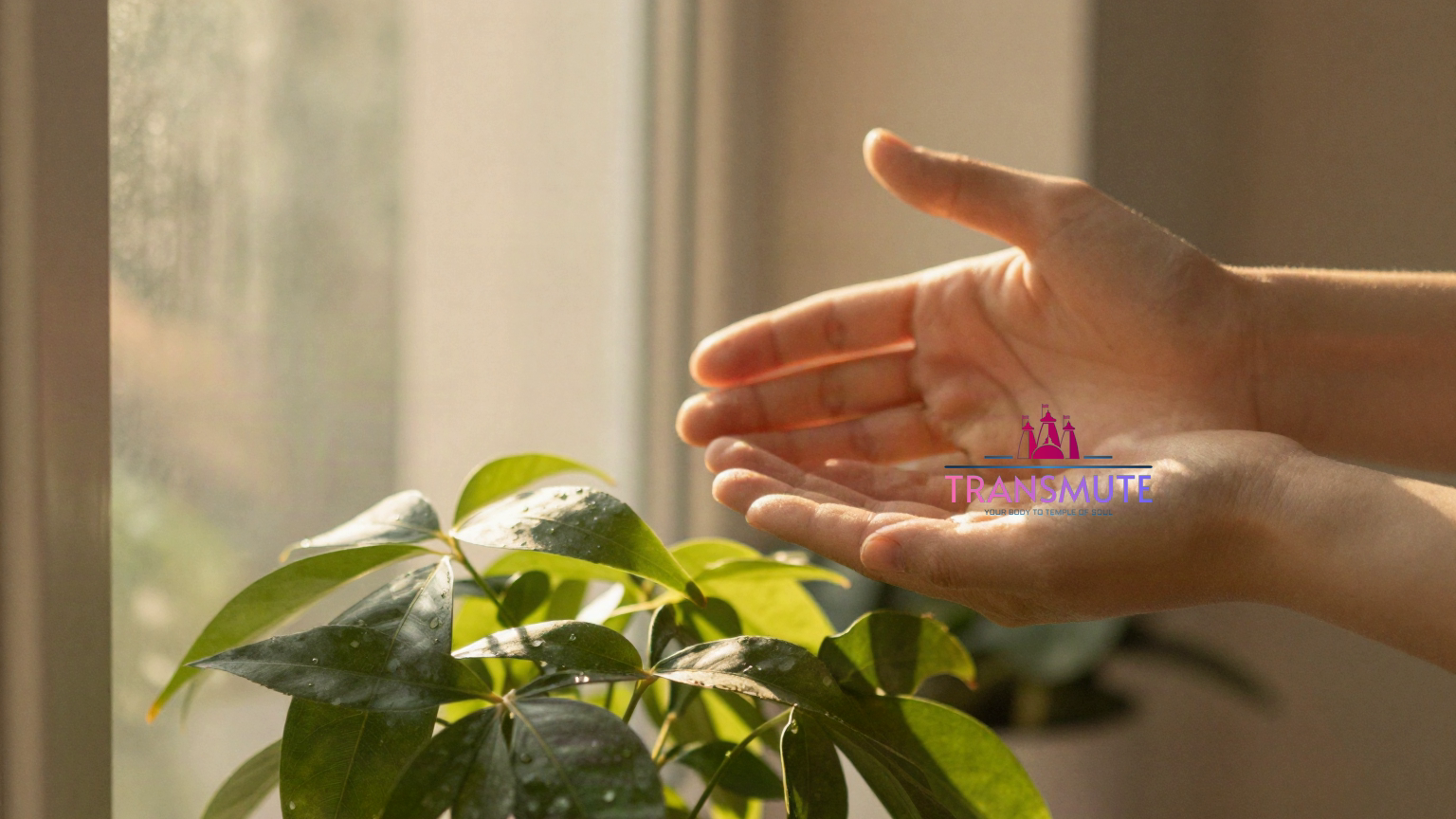
Reiki for Plants: Myth or Reality?
Your plants are living, breathing energy — the same as you, your pet, or anyone you'd sit down and give Reiki to. Most people never think to point that healing hands-on practice toward a windowsill full of pothos or a struggling tomato patch, but practitioners have been doing exactly this for decades. Reiki for plants isn't a stretch of the tradition — it's a real, established branch of it, with its own technique, its own symbol, and its own quietly devoted following of gardeners who swear their plants respond to it.
This guide walks through how it's actually done — the hand technique, the symbols practitioners reach for, how to charge water and seeds, and even how to send Reiki to a garden you're not standing in front of. And "myth or reality" has a clear answer: this is real, established practice, and your own belief is part of what makes it work.
Table of Contents
- Kya Reiki Sach Mein Plants Ko Heal Kar Sakti Hai?
- Cho Ku Rei — Power Aur Grounding Symbol Plants Ke Liye
- Reiki Dene Ka Tarika — Hands-On Practice
- Paani Aur Beej Ko Charge Karna
- Distance Reiki Apne Garden Ke Liye
- Hon Sha Ze Sho Nen — Plant Ke Optimum Growth Ke Liye Future Visualization
- Aapka Vishwas Hi Uske Bhavishya Hai
- Frequently Asked Questions
- Key Takeaways
Kya Reiki Sach Mein Plants Ko Heal Kar Sakti Hai?
Reiki works with life-force energy — and a plant carries that energy just as much as any person does. It grows, it responds to its environment, it can look vibrant or visibly stressed. Practitioners who work with plant Reiki aren't treating this as a metaphor; they approach a struggling plant the same way they'd approach a person who needs support — with focused hands, clear intention, and the same symbols used in any other Reiki session.
This is a genuinely traditional practice, not a modern invention tacked onto Reiki to make it trendier. Reiki masters have written about gardening and plant work for years, and it shows up consistently across practitioner communities — a windowsill herb garden, a stressed office plant, an entire vegetable patch, all treated as legitimate recipients of Reiki energy.
Cho Ku Rei — Power Aur Grounding Symbol Plants Ke Liye
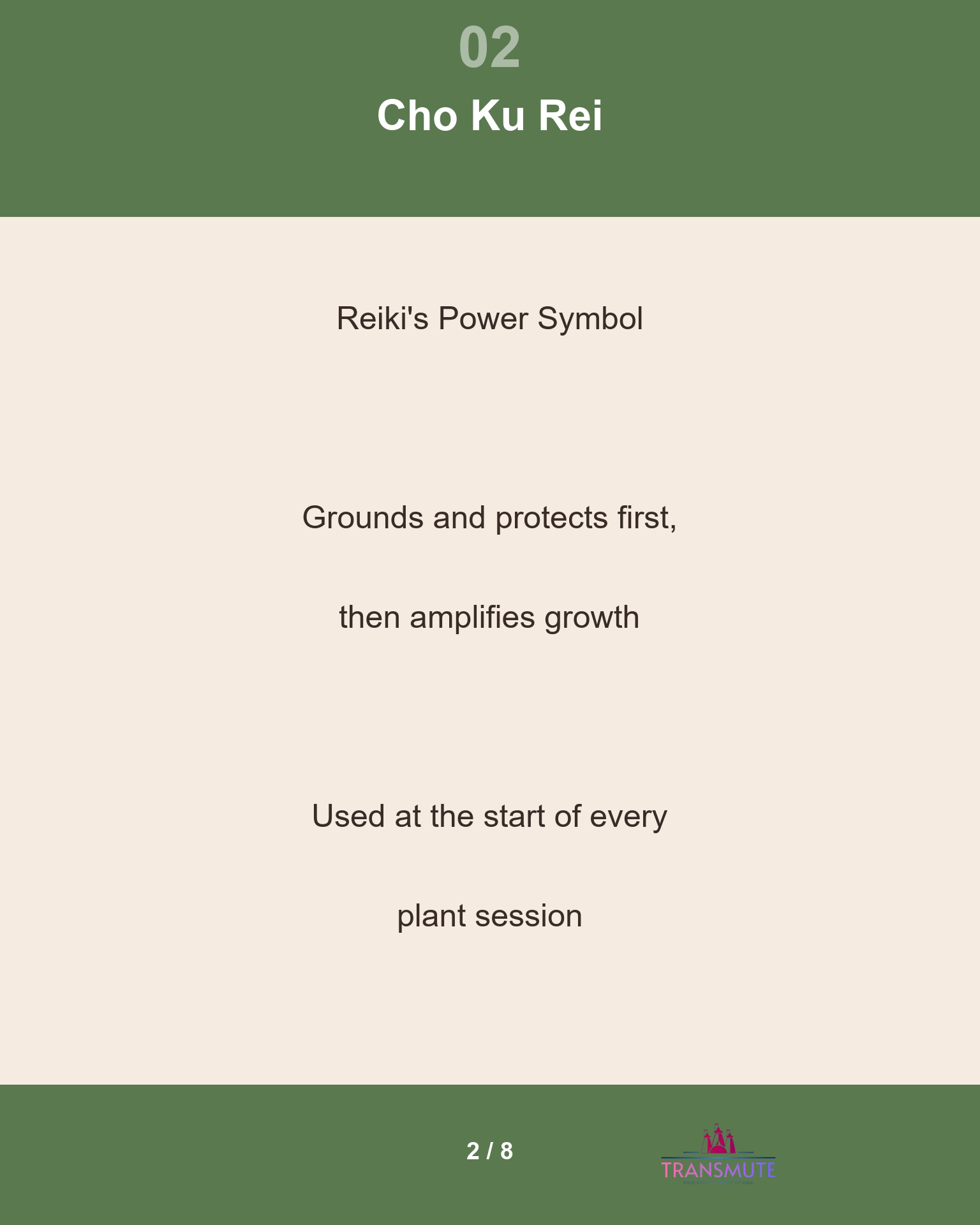
Cho Ku Rei is the symbol most practitioners reach for first when working with plants. Known as the Power Symbol, its intention translates roughly to "place the power of the universe here" — it's used to amplify and focus Reiki energy toward a specific goal, which is exactly what a plant needs when the goal is stronger, healthier growth.
But Cho Ku Rei isn't only about boosting power. Practitioners also use it for grounding and protection — connecting the work to earth energy and shielding the plant and the space around it before the growth-focused intention begins. In practice, this means drawing or visualizing Cho Ku Rei at the start of a plant session, letting it settle and ground the energy, before layering in the intention for vitality and growth. It's a two-part symbol for this work: ground and protect first, then amplify.
Reiki Dene Ka Tarika — Hands-On Practice
Giving Reiki to a plant follows the same basic shape as giving it to a person, just scaled to a much smaller, quieter recipient.
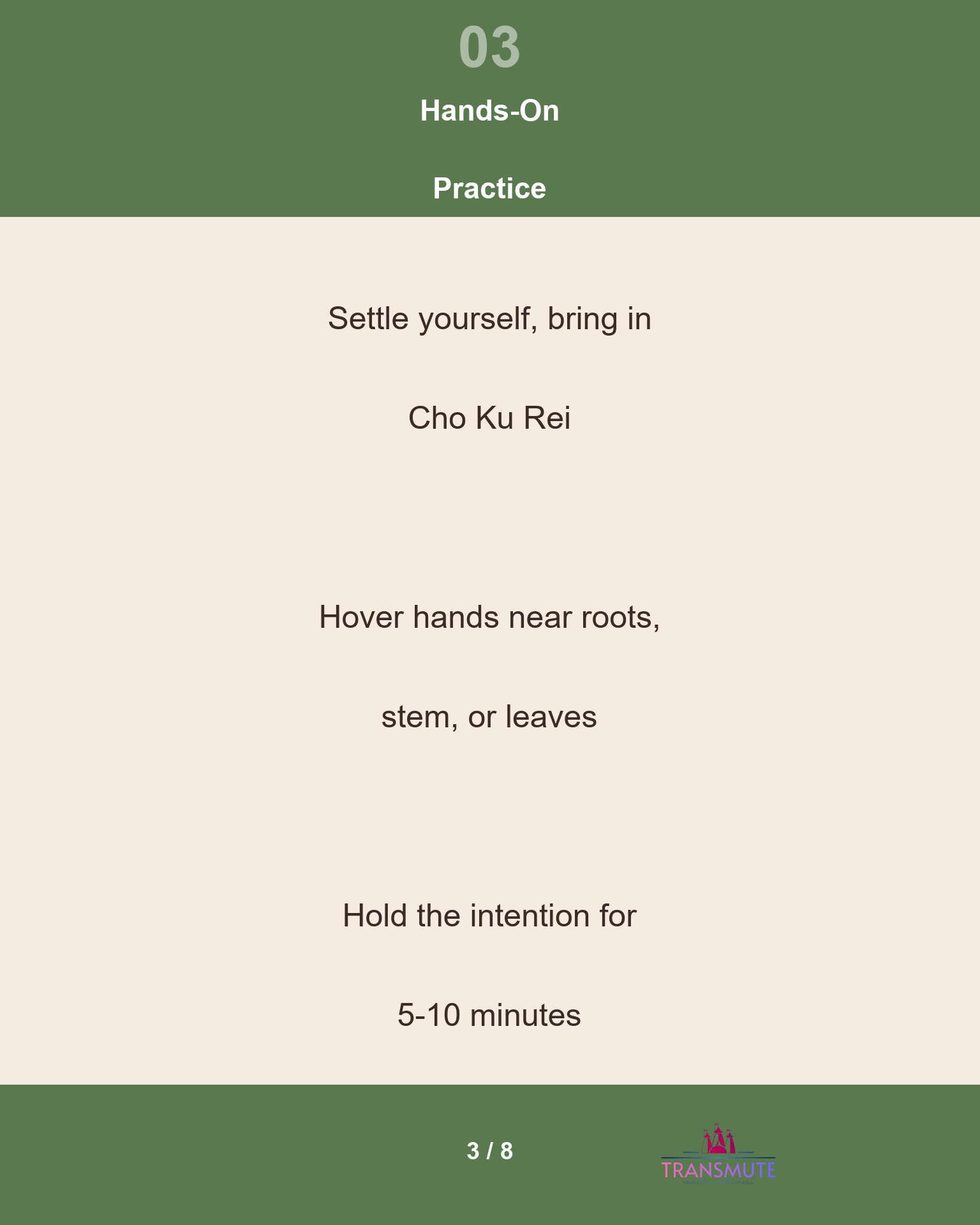
1. Settle yourself first. A few slow breaths, hands resting gently, until you feel calm and present. This matters as much here as it does in any Reiki session.
2. Bring in Cho Ku Rei. Draw or visualize the symbol to ground and protect the space, then hold the intention of amplifying healing energy toward the plant.
3. Hover or gently rest your hands near the plant. Close to the roots, the stem, or the leaves — wherever feels right. There's no need to touch delicate leaves directly; a few inches above is enough for the energy to reach.
4. Hold the intention for 5 to 10 minutes. Picture the energy flowing into the roots first, then moving up through the stem into the leaves and any flowers or fruit. Some practitioners describe this as a warm light, others simply hold the thought of vitality and health.
5. Close gently. Thank the energy, release the intention, and let the plant do the rest in its own time.
A few minutes, a few times a week, is a reasonable place to start — consistency tends to matter more than any single long session.
Paani Aur Beej Ko Charge Karna
Beyond hands-on sessions, two of the most commonly practiced techniques don't require touching the plant at all:
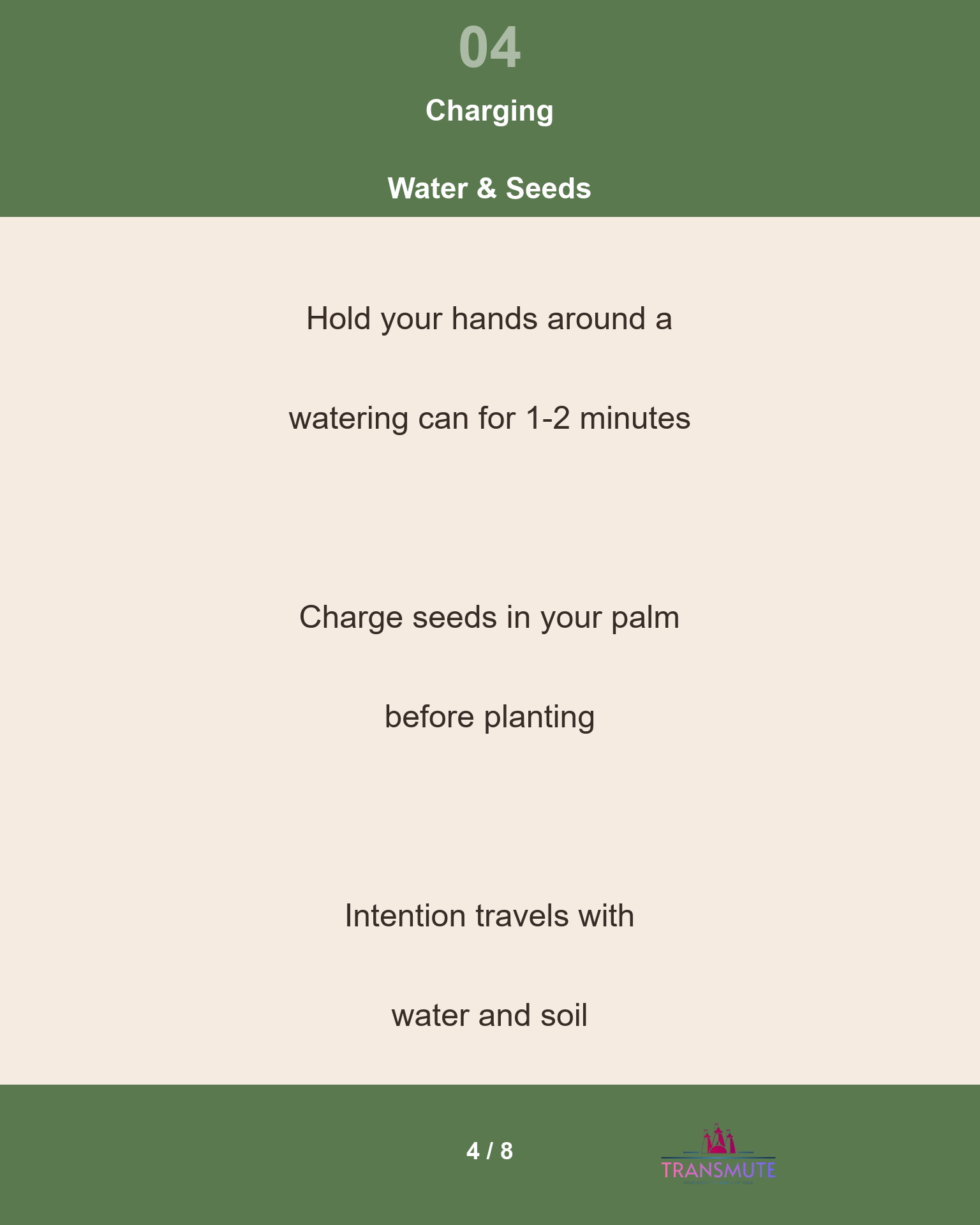
Charging the watering can. Before watering, hold your hands around the watering can (or a jug of water) and direct Reiki energy into it for a minute or two, the same way you'd charge water for drinking. Then water your plants as usual — the intention travels with the water, straight to the roots.
Charging seeds before planting. Hold seeds in your palm, bring in the intention of healthy, strong growth, and let Reiki flow into them for a few minutes before they go into the soil. Many gardeners who practice this do it as a small ritual every time they start something new — a way of setting the growth's foundation with intention from the very first moment.
Distance Reiki Apne Garden Ke Liye
Reiki's most valued tradition is that energy isn't limited by physical distance — and this applies to your garden exactly as it applies to a person. If you're traveling, or your garden is somewhere you can't visit today, you can still direct healing intention toward it.
Sit quietly, bring your garden or plant clearly to mind (a photo helps if you have one), and hold the same intention you'd use in person — Cho Ku Rei for grounding and power, then a few minutes of focused energy directed toward the plant's wellbeing. Distance doesn't diminish this; it's simply a different way of reaching the same place.
Hon Sha Ze Sho Nen — Plant Ke Optimum Growth Ke Liye Future Visualization
Here's a technique that goes a layer deeper than present-moment distance work: Hon Sha Ze Sho Nen, Reiki's distance symbol, is also traditionally used to send energy forward — into a future point in time, not just across present-day distance.
For a plant, this means visualizing it already thriving: fully grown, vibrant, healthy, at its optimum state — and then directing Reiki energy toward that future image, almost like storing it as a battery the plant can draw on as it actually grows into that point. Practitioners describe this as setting an energetic template for the plant to grow toward, rather than only responding to its current condition. It's a genuinely different intention than hands-on or distance work in the present — future visualization holds space for where the plant is going, not just where it is now.
Aapka Vishwas Hi Uske Bhavishya Hai
Here's the part that ties everything above together: your faith is that plant's future. Reiki has never been a mechanical process where the symbols do all the work while you stand by, uninvolved — your energy, your attention, and your genuine belief in what you're doing are themselves part of the practice. When you sit down to give a plant Reiki, the intention you hold, the care you bring, and the trust you place in the process become part of how that plant grows.
This is why consistency and genuine presence matter more than any single technique. A practitioner who shows up with real belief and real attention is doing something different from someone going through the motions. Generations of practitioners and gardeners have watched this play out season after season — the plants they tend with real faith and real intention are the ones that thrive.
Frequently Asked Questions
Can Reiki actually help a plant grow, or is this just placebo?
Within Reiki tradition, it's treated as a real, effective practice — plants are living energy, and practitioners approach them with the same seriousness as any other healing work. Your genuine belief and intention are part of the practice itself, not separate from it — that's what makes this real, lived experience rather than a mechanical routine.
How do you give Reiki to a plant?
Ground yourself, bring in Cho Ku Rei, then hover or gently rest your hands near the roots, stem, or leaves for 5 to 10 minutes, holding the intention of vitality and healthy growth.
Which Reiki symbol is used for plants?
Cho Ku Rei, the Power Symbol, is the one most commonly used — both for amplifying growth-focused energy and for grounding and protecting the space before that work begins.
Can you send distant Reiki to a garden you're not near?
Yes — distance doesn't limit Reiki. You can hold the plant or garden in mind, wherever you are, and direct the same intention you'd use in person.
What is the "future visualization" technique with Hon Sha Ze Sho Nen?
It's a technique using Reiki's distance symbol to send energy toward a future point rather than the present moment — visualizing the plant already thriving at its optimum, healthy state, and directing energy toward that image as something to grow into.
How much does my own belief matter?
More than most people expect. Reiki isn't a mechanical process you can go through while disengaged — your faith and attention are part of what shapes the outcome. Your belief in the practice is genuinely part of that plant's future.
How often should you give a plant Reiki?
A few minutes, a few times a week, is a reasonable starting rhythm — consistency matters more than long individual sessions.
Can Reiki revive a dying or stressed plant?
Many practitioners use exactly this combination — hands-on sessions, charged water, and grounding with Cho Ku Rei — specifically for stressed or struggling plants, alongside whatever the plant's actual physical care needs (light, water, soil). Reiki is a complement to good plant care, not a replacement for it.
Key Takeaways
Reiki for plants is a real, traditional branch of Reiki practice — not a stretch of the tradition, and not something invented for this piece. Cho Ku Rei grounds, protects, and amplifies the work; hands-on sessions, charged watering-can water, and charged seeds are all genuine, commonly practiced techniques; and both distance Reiki and the deeper Hon Sha Ze Sho Nen future-visualization technique let you extend that care beyond the present moment and beyond physical presence. Above all: your faith is that plant's future — the energy, attention, and belief you bring are themselves part of the practice, passed down through generations of practitioners and gardeners who've watched this play out season after season.
Disclaimer
This article describes traditional Reiki practice and beliefs around energy healing as applied to plants. It's offered as a spiritual and complementary practice, not a substitute for proper plant care — light, water, soil, and nutrients remain essential, and a plant in genuine distress may need attention beyond energy work.



Leave a Reply