Reiki for Panic Attacks: What Actually Helps in the Moment
Your heart is pounding, your chest feels tight, and a thought cuts through everything else: is something seriously wrong with me? Reiki has real, growing evidence behind it for anxiety relief — and a simple Reiki self-practice, used the right way, can genuinely help you move through a moment like this. If you want the fuller picture of what Reiki actually is, see our [Reiki for Anxiety] guide. Right now, here's what's happening in your body, a practice you can use immediately, and — first, before anything else — a quick safety check.
This guide covers all three: the safety check that comes first, a short in-the-moment practice built around a real Reiki self-treatment position paired with the one breathing method research has confirmed helps in this exact state, and why Reiki is genuinely worth having in your toolkit for panic and anxiety more broadly.
Table of Contents
- First — Is This a Panic Attack or Something Else?
- What's Actually Happening in Your Body
- The Hand-on-Heart Reset
- Why Reiki Genuinely Helps
- Frequently Asked Questions
- Key Takeaways
First — Is This a Panic Attack or Something Else?
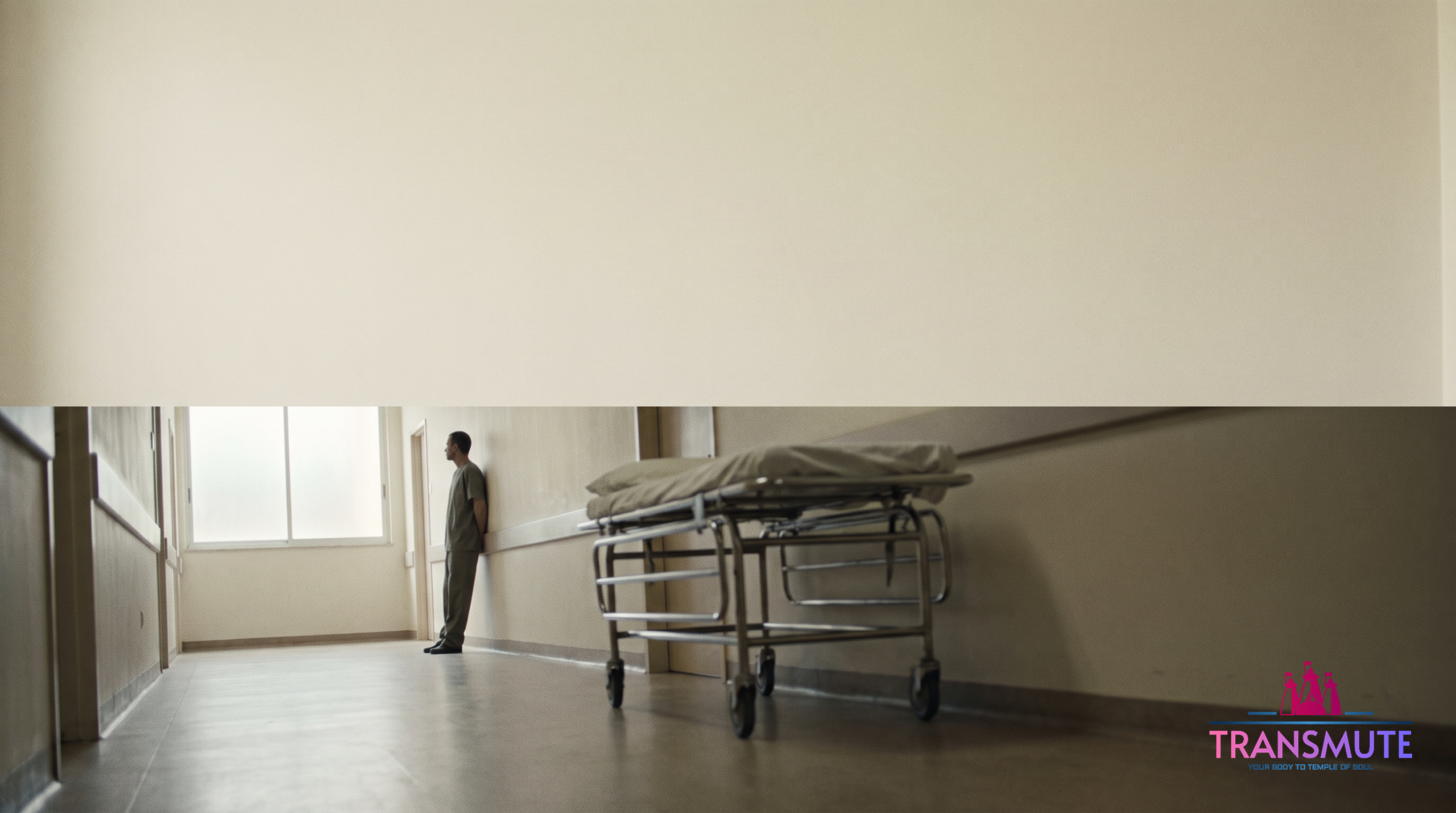
This has to come before anything else, because getting it wrong can genuinely matter. Panic attacks and heart attacks can share real symptoms — chest pain or tightness, shortness of breath, a racing heart, nausea, a sense of doom — and in the moment, that overlap is exactly what makes it frightening to sit with.
A few things tend to separate them. Panic attacks typically peak fast, usually within about ten minutes, and the physical intensity generally starts to ease within 20–30 minutes even without doing anything. Heart attack symptoms tend to build more gradually and don't fade on their own — pain that presses or radiates into the arm, jaw, or back is more characteristic of a cardiac event than a panic attack. Panic attacks are also often (not always) tied to a specific trigger or a racing train of thought, where a heart attack isn't set off by what you're thinking about.
None of that is a diagnostic tool, and it isn't meant to be one. If your symptoms are new, severe, last more than five to ten minutes without easing, spread to your arm or jaw, or simply feel different from panic you've experienced before, treat it as a possible cardiac emergency and seek immediate medical care. It is never the wrong call to get checked out. Everything below this section is for when you already know — from experience, or from a medical professional — that what you're dealing with is panic, not a cardiac event.
What's Actually Happening in Your Body
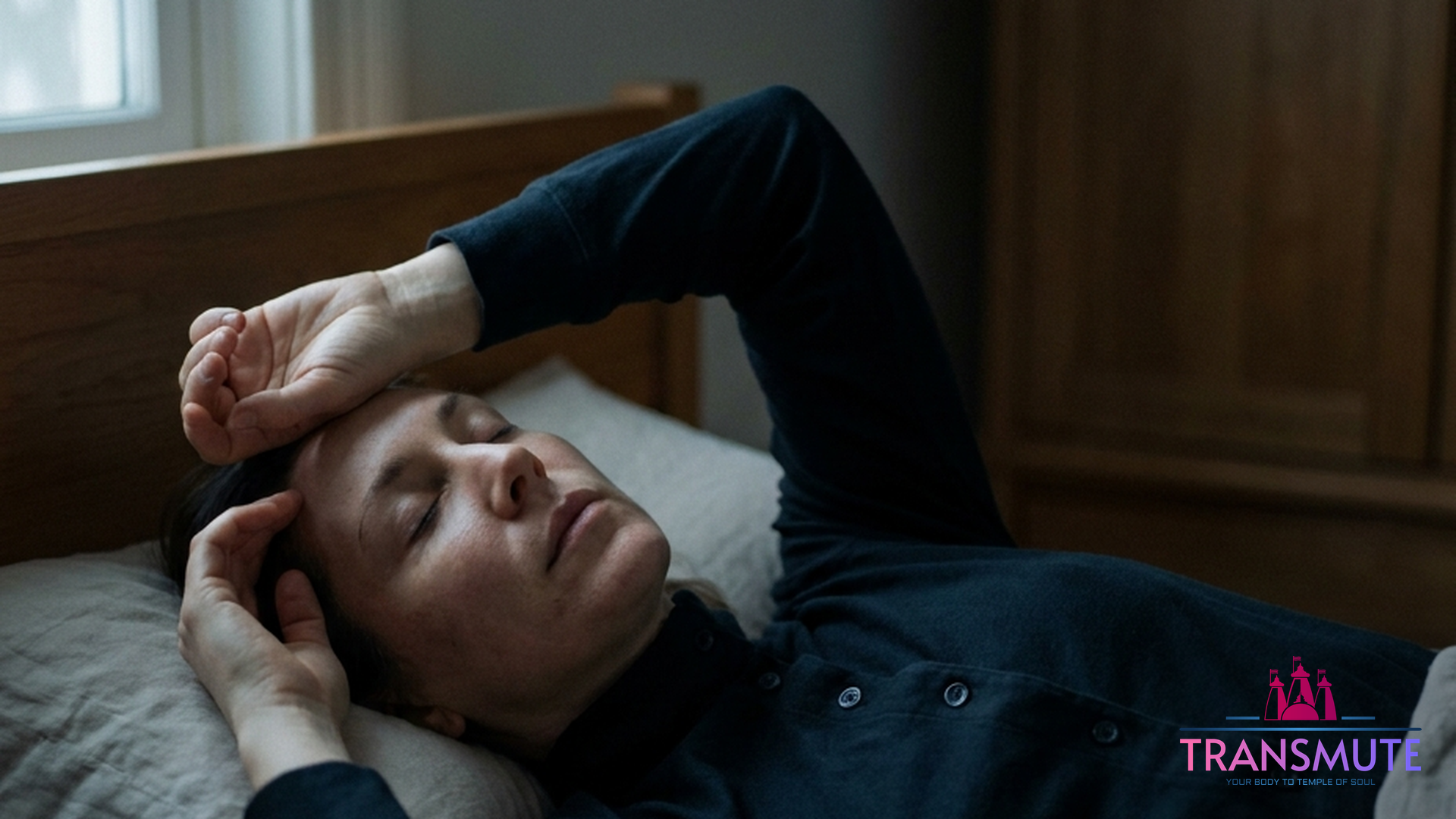
A panic attack isn't "in your head" in the dismissive sense that phrase usually implies — it's a very real, measurable event in your sympathetic nervous system, the branch of your autonomic nervous system responsible for mobilizing your body against a threat. During a panic attack, your body floods with adrenaline (epinephrine) and noradrenaline, your heart rate and breathing speed up, blood shifts toward your muscles, and your senses sharpen — the same "fight or flight" machinery that would serve you well against a genuine physical threat, firing at full intensity with nowhere for that energy to go.
That's what produces the specific cluster of panic-attack symptoms: trembling, shortness of breath, chest tightness, hot or cold flashes, tingling, dizziness, a choking sensation, and — understandably, given how it feels — a fear that something is seriously physically wrong. Clinically, a panic attack is defined as this cluster of symptoms arriving abruptly and peaking within about ten minutes. It's an intense, real physiological event. It is not a character weakness, and it is not "just anxiety" in the way that phrase gets used dismissively.
The Opposite of Freeze
If you've read our guide to the freeze response, this is a useful contrast: freeze is your nervous system's dorsal vagal shutdown state — heart rate slows, the body goes still and numb, energy conserves. A panic attack is close to the physiological opposite: your sympathetic nervous system running at full throttle, heart racing, body flooded with mobilizing energy rather than shutting it down.
That distinction matters practically, not just academically — because the freeze guide makes a point of noting that freeze responds better to gentle, activating movement than to calming techniques, since slow breathing is built for fight-or-flight, not shutdown. Panic attacks are exactly the state that calming, downregulating techniques are built for. What helps one can be closer to the wrong move for the other.
The Hand-on-Heart Reset
This is a short, two-part practice for the moment you're actually in an attack, built around one of Reiki's own core self-treatment positions, paired with the one piece of breathing research that specifically targets this state.
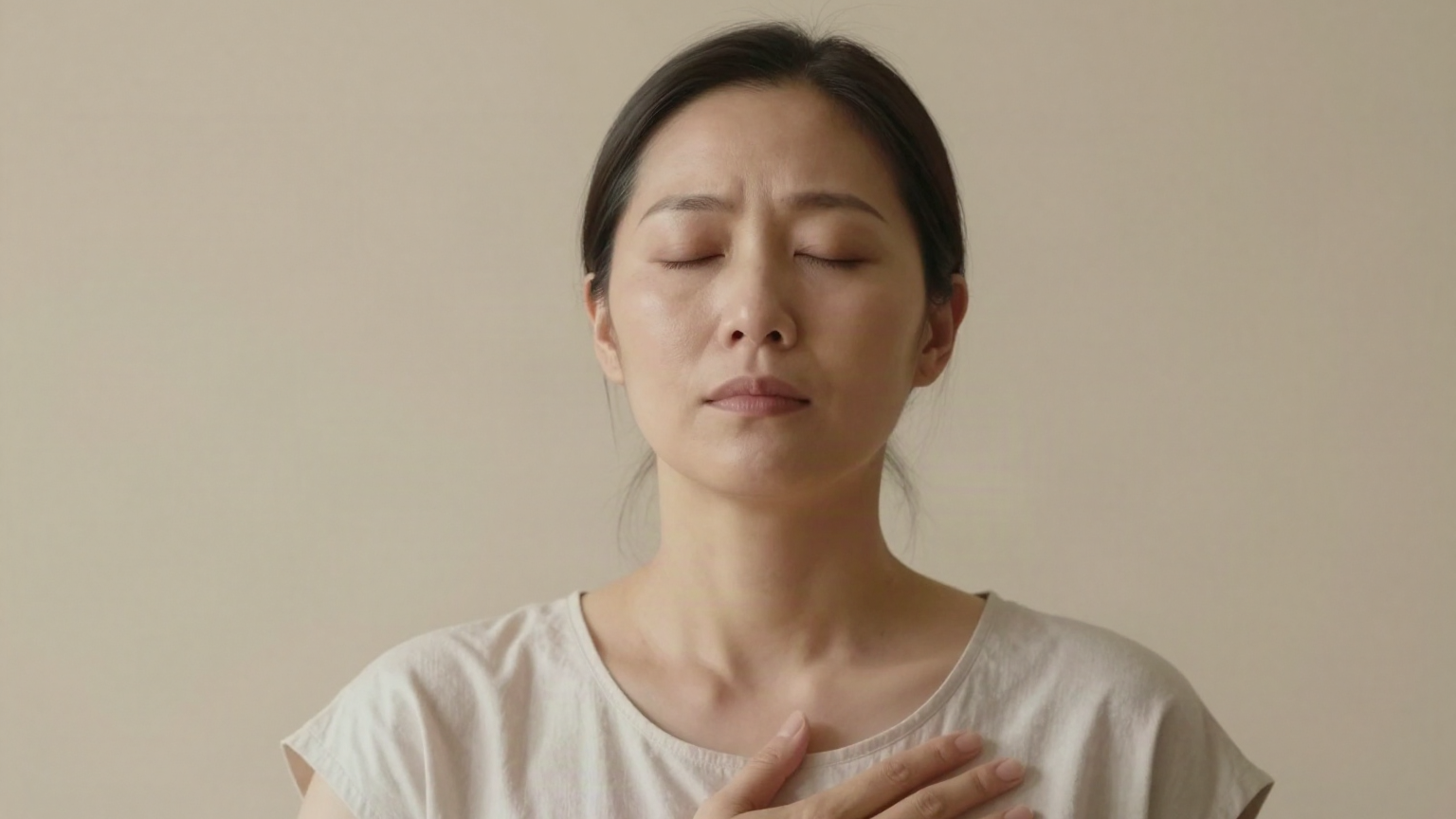
1. Place one or both hands flat on your chest, over your heart. This is one of the standard Reiki self-treatment hand positions, used by practitioners specifically to direct calming energy to the heart center. It's simple enough to use anywhere, the moment you need it — direct, gentle contact over the chest and heart, channeling warmth and reassurance exactly where the tightness is. It gives your hands and your attention something to hold onto, instead of racing along with your thoughts.
2. Breathe with a longer exhale than inhale — inhale for a slow count of four, exhale for a slow count of six to eight. This is the part with the most direct evidence behind it. A 2018 review by Gerritsen and Band in Frontiers in Human Neuroscience found that slow breathing techniques reliably increase vagal tone and parasympathetic activity — the "rest and digest" branch of your nervous system that counteracts the sympathetic surge driving a panic attack. A 2023 Stanford study went further, finding that "cyclic sighing" — breathing with a deliberately extended exhale — reduced anxiety more effectively than mindfulness meditation in the same trial. The mechanism is straightforward: your heart rate naturally slows slightly on the exhale via vagus-nerve signaling, so a longer exhale spends more of each breath cycle with your calming system engaged.
Do this for one to two minutes, or until the acute wave has clearly started to ease — it usually will, since panic attacks are physiologically self-limiting even without intervention. If your breathing itself feels out of control or you feel like you can't get a full breath, don't force the count — slow, natural breaths through the nose are enough; the goal is a longer exhale than inhale, not perfect precision.
Why Reiki Genuinely Helps
Reiki's evidence for anxiety has grown meaningfully, and it's worth knowing the actual research, not just the tradition: a 2024 meta-analysis in BMC Palliative Care found Reiki had a significant positive effect on anxiety across the studies it reviewed, and a 2022 study in Frontiers in Psychology reported moderate-to-high evidence for Reiki's effect on clinically relevant anxiety — with even short courses of a few sessions, and moderate-frequency courses of six to eight sessions, showing measurable, real benefit. This is a real and growing evidence base, and researchers in the field are actively continuing to study it further.
Regular Reiki sessions build a foundation that makes moments like an acute panic attack easier to move through — a calmer, more regulated nervous system baseline, cultivated over time, alongside whatever care you're already receiving. That's exactly why a Reiki self-practice like the Hand-on-Heart Reset belongs in your toolkit for the acute moment itself, not just between episodes.
If panic attacks are frequent, severe, or new, it's always worth also bringing that to a doctor or licensed mental health professional — Reiki works beautifully alongside that care, as a genuine part of your overall support system, not a replacement for it.
Frequently Asked Questions
Can Reiki actually help during a panic attack while it's happening?
Yes — a simple Reiki self-practice like the Hand-on-Heart Reset above is designed exactly for this, using a real Reiki hand position paired with breathing that has direct research behind it. Reiki's broader anxiety research covers sessions over time, so think of the two as working together: the in-the-moment practice for right now, and ongoing Reiki sessions for building a calmer baseline.
How do I know if it's a panic attack or a heart attack?
Panic attacks tend to peak within about 10 minutes and ease within 20–30, often tied to a trigger. Heart attack symptoms tend to build gradually, persist, and can radiate to the arm or jaw. If you're unsure, or symptoms are new, severe, or don't ease, treat it as a possible emergency and get checked out.
What's the difference between a panic attack and generalized anxiety?
A panic attack is a discrete, intense episode that peaks fast and involves a specific physical symptom cluster. Generalized anxiety tends to be more ongoing, lower-intensity worry rather than a sudden physiological surge.
Does Reiki have real scientific evidence behind it for anxiety?
Yes — moderate-to-high evidence in recent meta-analyses for genuine anxiety reduction over a course of sessions, and it's a growing body of research. It's real, measurable support for something Reiki practitioners and their clients already know from experience.
Can I do Reiki on myself during a panic attack, or do I need a practitioner?
Simple self-practice hand positions, like the hand-on-heart gesture used in this guide, don't require a practitioner. A full Reiki session is a longer, separate practice better suited to between episodes, not the acute moment itself.
How is a panic attack different from the freeze response?
They're close to physiological opposites. A panic attack is sympathetic nervous system activation — fight-or-flight running at full intensity. Freeze is dorsal vagal shutdown — the body going still and conserving energy. What helps one (calming, extended-exhale breathing) isn't necessarily what helps the other (gentle, activating movement).
How long does a panic attack usually last?
Symptoms typically peak within about 10 minutes and substantially ease within 20–30 minutes, even without any intervention — panic attacks are physiologically self-limiting.
Is it safe to use breathing techniques during a panic attack, or could it make hyperventilation worse?
For most people, slow breathing with a longer exhale helps rather than worsens symptoms — it's specifically designed to counter the rapid, shallow breathing pattern of hyperventilation. If a technique ever makes you feel worse or more breathless, stop forcing any pattern and let your breathing settle naturally.
Key Takeaways
Panic attacks are a real, measurable sympathetic-nervous-system event — not a character flaw, and not "just" anxiety in the dismissive sense. Before anything else, rule out a cardiac emergency: new, severe, or persistent chest symptoms need medical attention, not a breathing exercise. In the moment, the Hand-on-Heart Reset — a real Reiki self-treatment position paired with slow, extended-exhale breathing — has real grounding to offer, physically and energetically, with the exhale itself backed by controlled research on vagal tone. Reiki has a growing, moderate-to-high evidence base for genuine anxiety reduction, and it's a practice worth having in your corner both in the moment and over time. Panic is close to the physiological opposite of the freeze response — what calms one state can be the wrong tool for the other.
For the chakra-specific angle on anxiety, see Chakra Healing for Anxiety; for a nighttime-focused Reiki practice, see Reiki for Sleep; if you're new to chakras entirely, our [chakra healing for beginners] guide covers all seven in depth.
Disclaimer
This article is for educational purposes and describes general nervous-system physiology and self-regulation techniques. It is not a substitute for professional medical or mental health advice, diagnosis, or treatment, and it is not a tool for distinguishing a genuine cardiac emergency from a panic attack — when in doubt, seek immediate medical care. If panic attacks are frequent, severe, or new, please speak with a qualified healthcare provider or licensed mental health professional.
Leave a Reply