
Reiki for Sleep: The Wind-Down Sequence for When Your Mind Won't Switch Off
You're exhausted. The lights are off, the day is genuinely over, and your body wants to sleep — but your mind is still running through tomorrow's to-do list, or replaying a conversation from three days ago. You've tried the usual advice. Tonight you're looking for something more specific: a real reiki for sleep practice, not just another reminder to "relax."
This guide gives you exactly that — a short, night-specific self-Reiki sequence we call the Wind-Down Sequence, a 60-second version for when you wake at 3am and can't get back under, and an honest look at what reiki for sleep can and can't realistically do.
Table of Contents
- Reiki for Sleep: A Signal, Not a Sedative
- The Wind-Down Sequence
- The 3am Practice
- Pairing Reiki With Other Sleep Support
- Where to Go Next
- Frequently Asked Questions
- Key Takeaways
Reiki for Sleep: A Signal, Not a Sedative
A sedative works chemically — it changes your body's biochemistry to make you drowsy. Reiki, as it's traditionally practiced, doesn't work that way. Think of it instead as a signal: a calm, repetitive, hands-on ritual that tells your nervous system it's safe to stop being on alert. For reiki for sleep specifically, that signal matters most in the ten minutes before you actually try to fall asleep, when your body is deciding whether tonight is a "stand down" night or a "stay alert" night.
What the Research Actually Shows
Reiki research on sleep specifically is still developing — several clinical trials are currently underway looking at Reiki's effect on sleep quality in conditions like diabetic neuropathy and epilepsy, and results aren't fully in yet. What's better established is Reiki's effect on mood and general relaxation: a randomized controlled trial published via the National Center for Biotechnology Information found that participants with anxiety or depression who received Reiki sessions showed a meaningful improvement in mood compared to a control group. That's a reasonable, honest basis for using Reiki as part of a wind-down routine — not a claim that it cures insomnia.
The Wind-Down Sequence
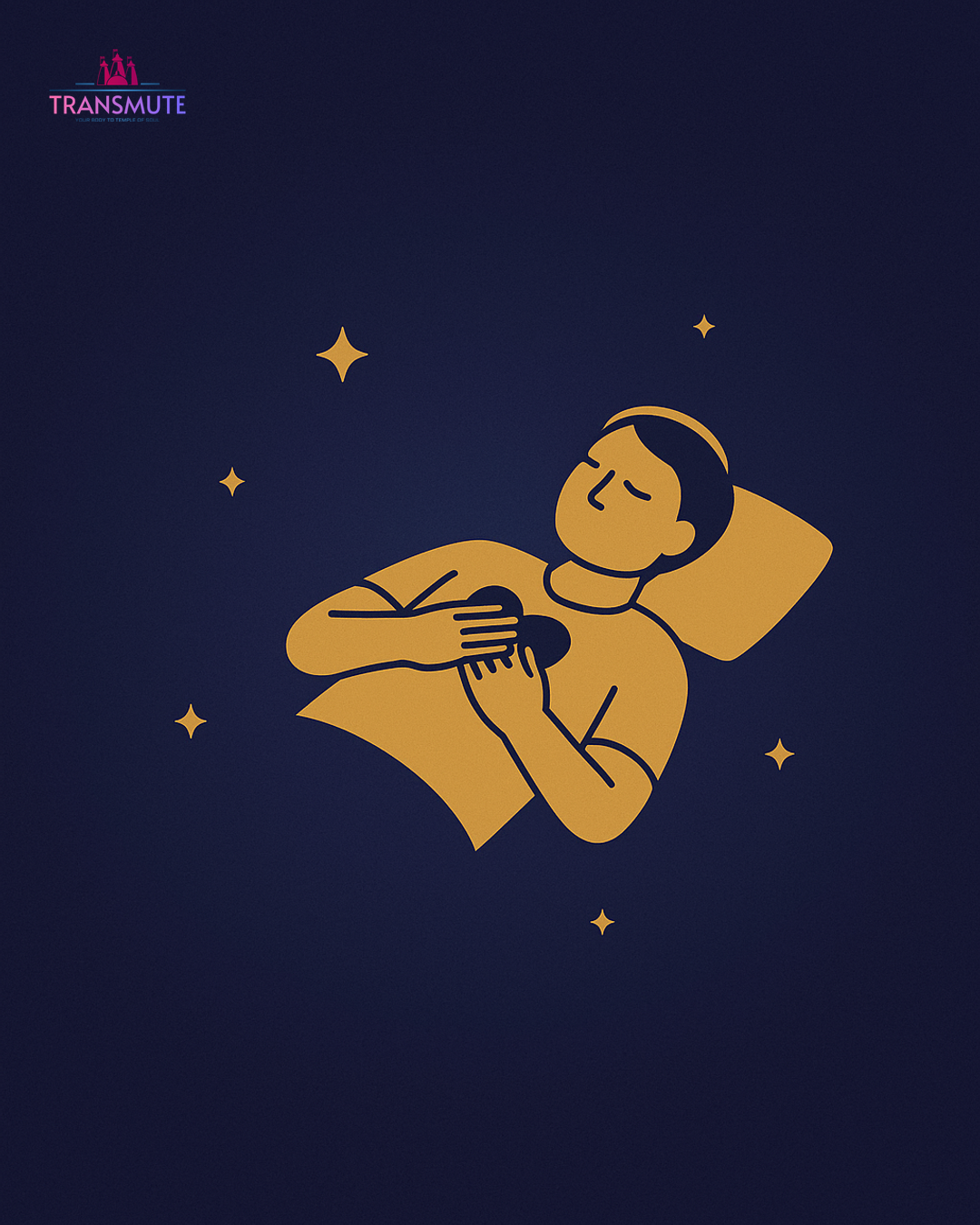
This is a three-step self-Reiki sequence, done lying in bed, lights already off. Traditionally, the crown and third-eye chakras are associated with stillness and a quiet mind, which is why this sequence focuses there rather than moving through all seven chakras the way our [chakra healing for beginners] guide does.
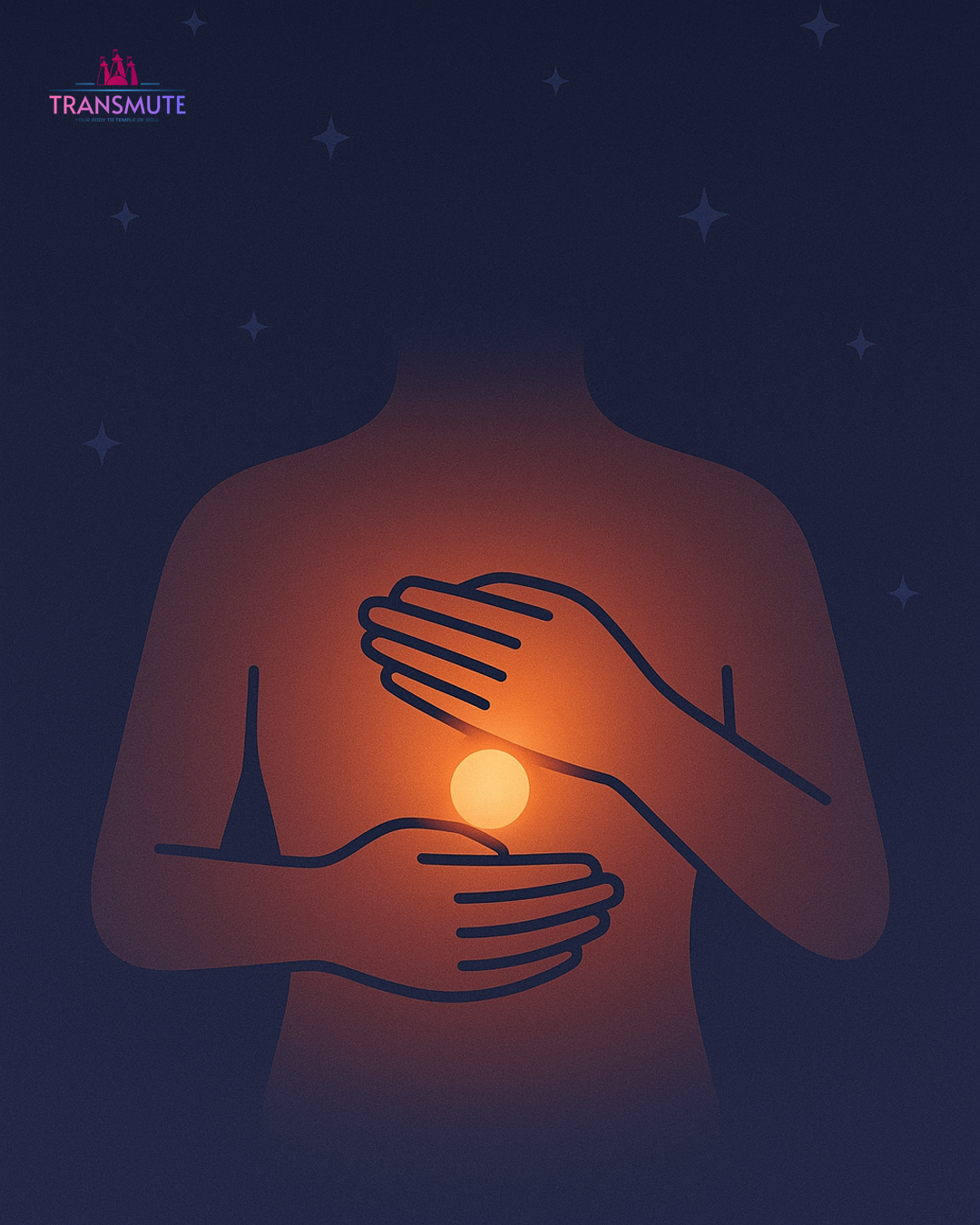
- Hands on heart (2 minutes). Rest both palms gently over your chest. Breathe slowly. This is the same grounding hand position used in general self-Reiki practice — here, it's simply the entry point, not the destination.
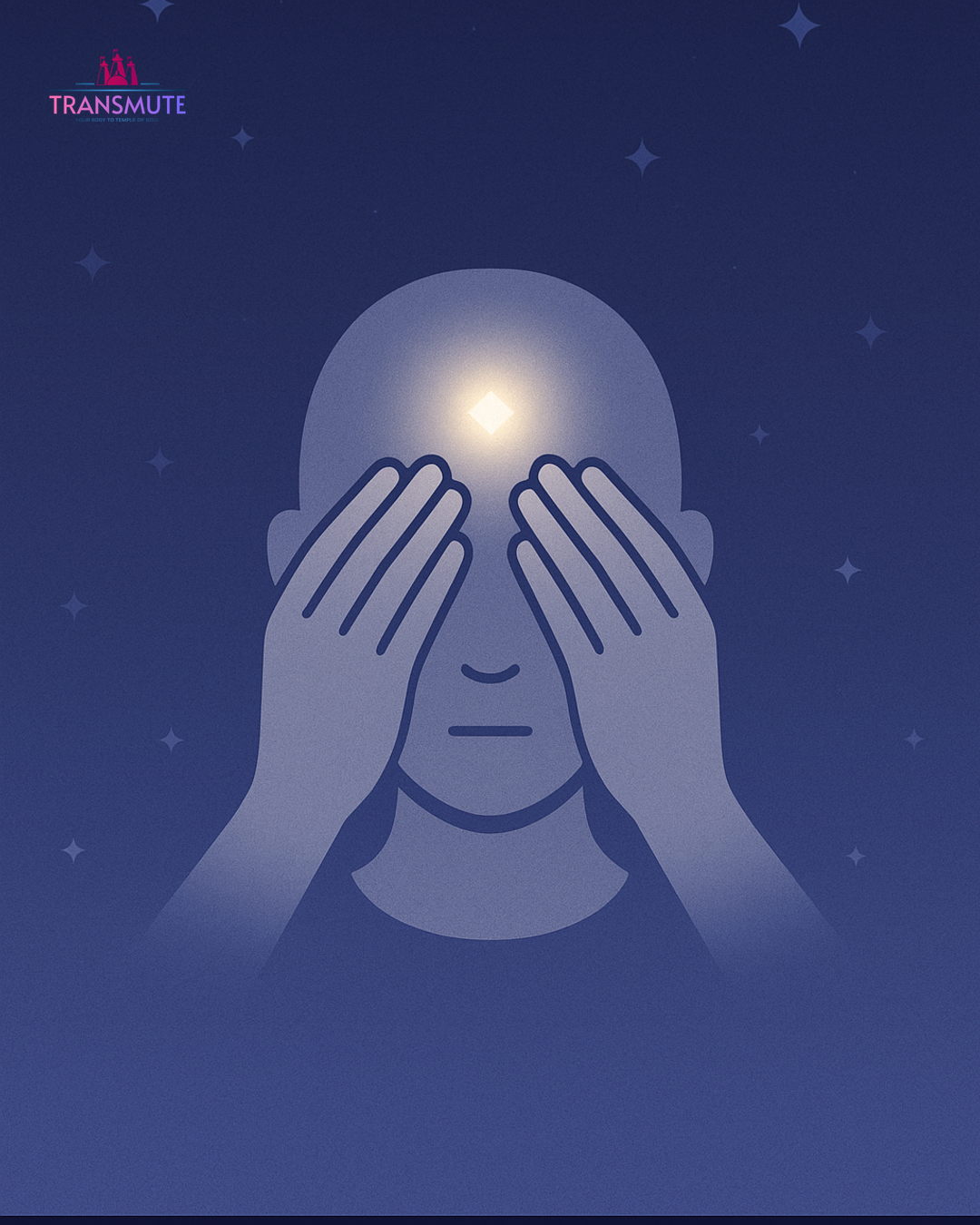
- Hands over closed eyes (2 minutes). Rest your palms lightly over your closed eyes, no pressure. Traditionally linked to the third-eye chakra and a quieting of mental chatter — a slower, more deliberate version of the head-hold technique described in our [Reiki for Anxiety] guide.
- Hands at the crown, or resting just above the head (1 minute). If lying down makes this awkward, simply resting one hand near the top of your head is enough. Traditionally associated with the crown chakra — a sense of letting go for the day.
Five minutes total. No candles, no music required — though both are fine if they help you settle in.
The 3am Practice
Waking at 3am with a racing mind is its own specific problem, and most sleep advice doesn't address it directly. If this happens, don't reach for your phone. Instead:
- Hands on chest, 30 seconds of slow breathing.
- Silently repeat one honest, steadying phrase — "I don't have to solve this right now" works well, because it doesn't pretend the racing thought isn't there, it just sets it down until morning.
- If you're still awake after a few minutes, that's fine — the goal is calm, not forced sleep.
Pairing Reiki With Other Sleep Support
Reiki for sleep and a supplement-based approach aren't rival camps — they work on different systems entirely. If you've read our [magnesium for sleep] guide, you already know magnesium's role is biochemical (supporting the nervous system's GABA "brake" pathway). Reiki's role here is behavioral and ritual — a consistent, calming signal your body learns to associate with "it's time to stop." Many people find the two genuinely complementary: magnesium as part of an evening routine, the Wind-Down Sequence as the last five minutes before lights-out.
Where to Go Next
If you're new to chakras entirely, our [chakra healing for beginners] guide covers all seven in depth. If anxiety (not just nighttime racing thoughts) is your main challenge, our [Reiki for Anxiety] guide and our piece on chakra healing for anxiety both go deeper on daytime techniques and the Anxiety Four framework.
Frequently Asked Questions (FAQ)
Can Reiki actually help you fall asleep?
Traditionally, yes, as a relaxation and nervous-system-calming practice. Direct research on Reiki and sleep-onset specifically is still limited and ongoing; stronger existing evidence supports its effect on general mood and relaxation, which is a reasonable basis for trying it as part of a wind-down routine.
What's the best self-Reiki routine to do before bed?
The Wind-Down Sequence above — hands on heart, then over closed eyes, then at the crown — takes about five minutes and is designed to be done lying down, lights off.
What should I do if I wake up at 3am and can't fall back asleep?
Try the 60-second 3am Practice: hands on chest, slow breathing, and a steadying phrase rather than reaching for your phone.
Is Reiki for sleep safe to do every night?
Generally yes — it's a gentle, non-invasive practice. If insomnia is persistent or severe, talk to a healthcare provider rather than relying on this alone.
Can I combine Reiki with magnesium or other sleep supplements?
Yes — they work through different systems (behavioral/ritual versus biochemical) and are commonly used together rather than as alternatives to each other.
Which chakras are most relevant for sleep specifically?
Traditionally, the crown and third-eye chakras are associated with stillness and a quiet mind, which is why the Wind-Down Sequence focuses there rather than all seven.
How is Reiki for sleep different from Reiki for anxiety?
Reiki for anxiety (see our dedicated guide) focuses on general, often daytime, anxiety management. Reiki for sleep narrows specifically to the pre-sleep window and the middle-of-the-night wake-up problem.
How long before bed should I do a self-Reiki practice?
The Wind-Down Sequence is designed to be done right at lights-out, in bed — there's no need to do it earlier in the evening.
Key Takeaways
Reiki for sleep works best understood as a signal to your nervous system, not a sedative — a calming ritual that tells your body it's safe to stand down for the night, not a chemical mechanism. The Wind-Down Sequence (heart, eyes, crown — five minutes, done lying in bed) gives you a concrete nightly practice, and the 3am Practice gives you something specific to do when you wake in the night. Research on Reiki and mood/relaxation is genuinely encouraging; research on sleep specifically is still developing. None of this replaces care for a persistent sleep disorder — it's a complementary practice to reach for alongside it.
Disclaimer
This article describes Reiki as understood within its own tradition — a complementary relaxation practice, not a scientifically validated treatment for insomnia or any diagnosed sleep disorder. It is for educational and reflective purposes only and is not a substitute for professional medical advice. If you're experiencing persistent or severe sleep difficulty, please speak with a qualified healthcare provider.


Leave a Reply