Vagus Nerve Healing for Anxiety: A Real, Doable Nervous System Reset
Your chest is tight, your thoughts are looping, and someone has just told you to "activate your vagus nerve." It sounds like the newest wellness buzzword — and in a lot of places online, it's being sold that way, with big promises and very little explanation. But underneath the trend is something real: a nerve you actually have, doing a job that's well documented in physiology, that you genuinely can influence in a matter of seconds.
This guide skips the hype. You'll learn what the vagus nerve is, what "vagal tone" actually means, which techniques have real evidence behind them (and which claims go further than the evidence supports), and a simple 5-minute daily practice plus a fast in-the-moment technique you can use the next time anxiety spikes.
Table of Contents
- What the Vagus Nerve Actually Is (And Why It's Not Mystical)
- Polyvagal Theory, in Plain English
- The 4 Vagus Nerve Techniques With Real Evidence Behind Them
- The 5-Minute Vagus Nerve Reset (Daily Practice)
- In the Moment — What to Do During a Spike of Anxiety
- What This Can and Can't Do
- Frequently Asked Questions
- Key Takeaways
What the Vagus Nerve Actually Is (And Why It's Not Mystical)
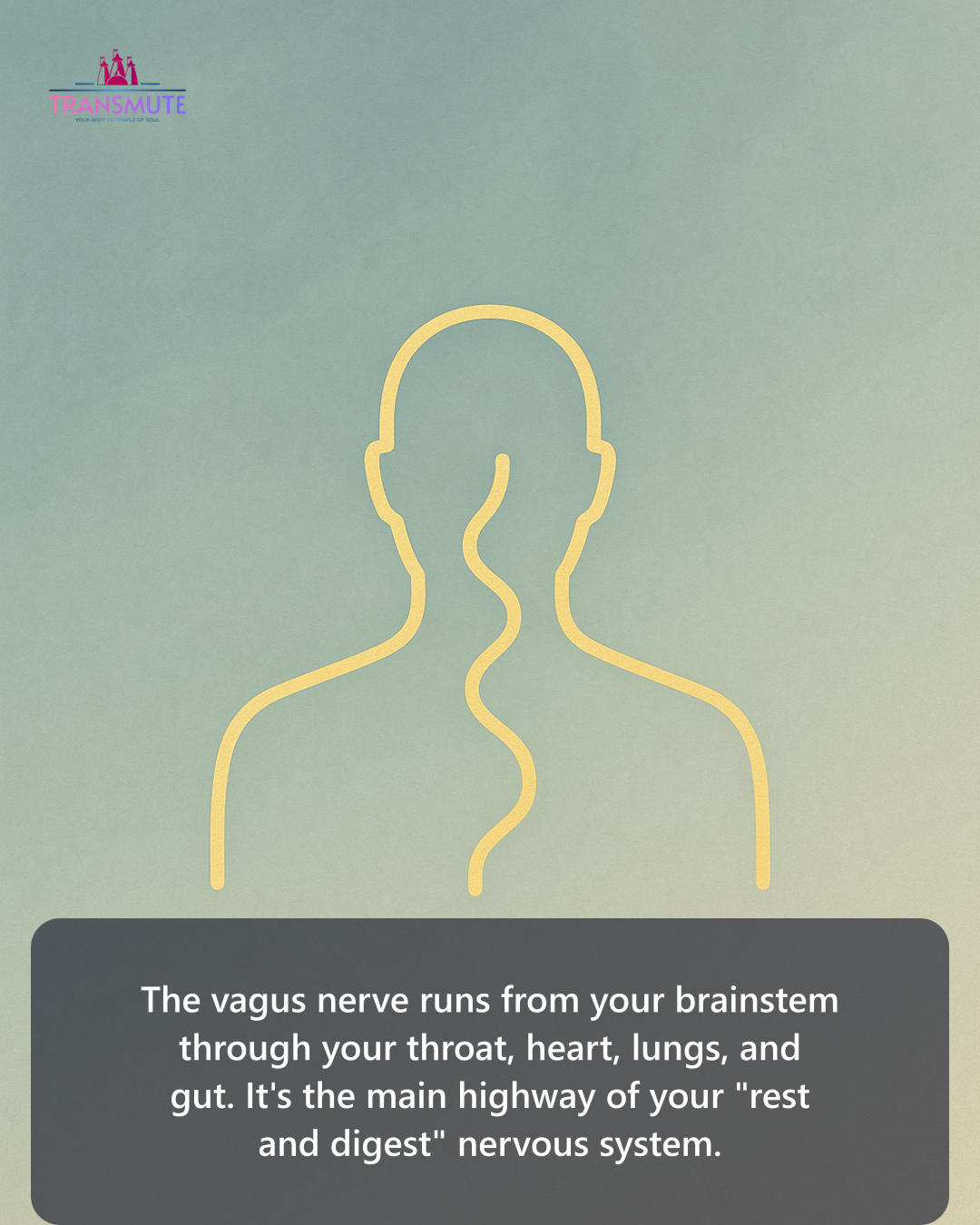
The vagus nerve is the tenth cranial nerve — a real, physical nerve, not a metaphor. "Vagus" is Latin for "wandering," which fits: it starts at the base of your brain and wanders down through your neck, chest, and abdomen, touching your throat, heart, lungs, and gut along the way. It's the main highway of your parasympathetic nervous system — the "rest and digest" side of your nervous system that counterbalances the "fight or flight" sympathetic side.
When people talk about vagal tone, they mean how efficiently your vagus nerve can shift your body out of a stressed, activated state and into a calmer one. Vagal tone is typically measured through heart rate variability (HRV) — the tiny, healthy variation in time between each heartbeat. Higher HRV generally reflects stronger vagal influence on the heart; lower HRV is associated with higher stress and, in some research, with social anxiety disorder specifically.
None of this is alternative medicine. It's standard autonomic physiology — the same nervous system doctors reference when they talk about heart rate, digestion, and stress response. What's newer is the wellness-world enthusiasm for it, which has occasionally outpaced what the research actually shows.
Polyvagal Theory, in Plain English
Much of the current "vagus nerve healing" conversation traces back to polyvagal theory, developed by psychiatrist and neuroscientist Dr. Stephen Porges. His framework proposes that your autonomic nervous system doesn't just have two settings (calm vs. activated) — it has three:
- Ventral vagal state — calm, socially engaged, able to connect and think clearly.
- Sympathetic state — fight or flight, mobilized for action.
- Dorsal vagal state — shutdown, numb, disconnected (the freeze response).
Polyvagal theory reframes anxiety not as a character flaw or a purely psychological event, but as your nervous system's read on whether your environment feels safe — and the goal of "vagal" techniques is to help nudge your body back toward that first, ventral vagal state.
It's worth being honest here: polyvagal theory is influential and widely used in trauma-informed therapy, but it also has real scientific critics. Physiologist Paul Grossman, among others, has questioned whether the evolutionary and anatomical story Porges tells fully holds up against what comparative anatomy shows across species. Treat polyvagal theory as a useful, popular framework for understanding your body's stress response — not as uncontested scientific fact.
The 4 Vagus Nerve Techniques With Real Evidence Behind Them
Here's the part most "vagus nerve" content skips: what does the actual research say? Below are four techniques with genuine physiological evidence — mostly showing measurable short-term changes in heart rate or HRV, which is a meaningfully different (and more modest) claim than "cures anxiety."
1. The Extended Exhale (Slow Breathing)
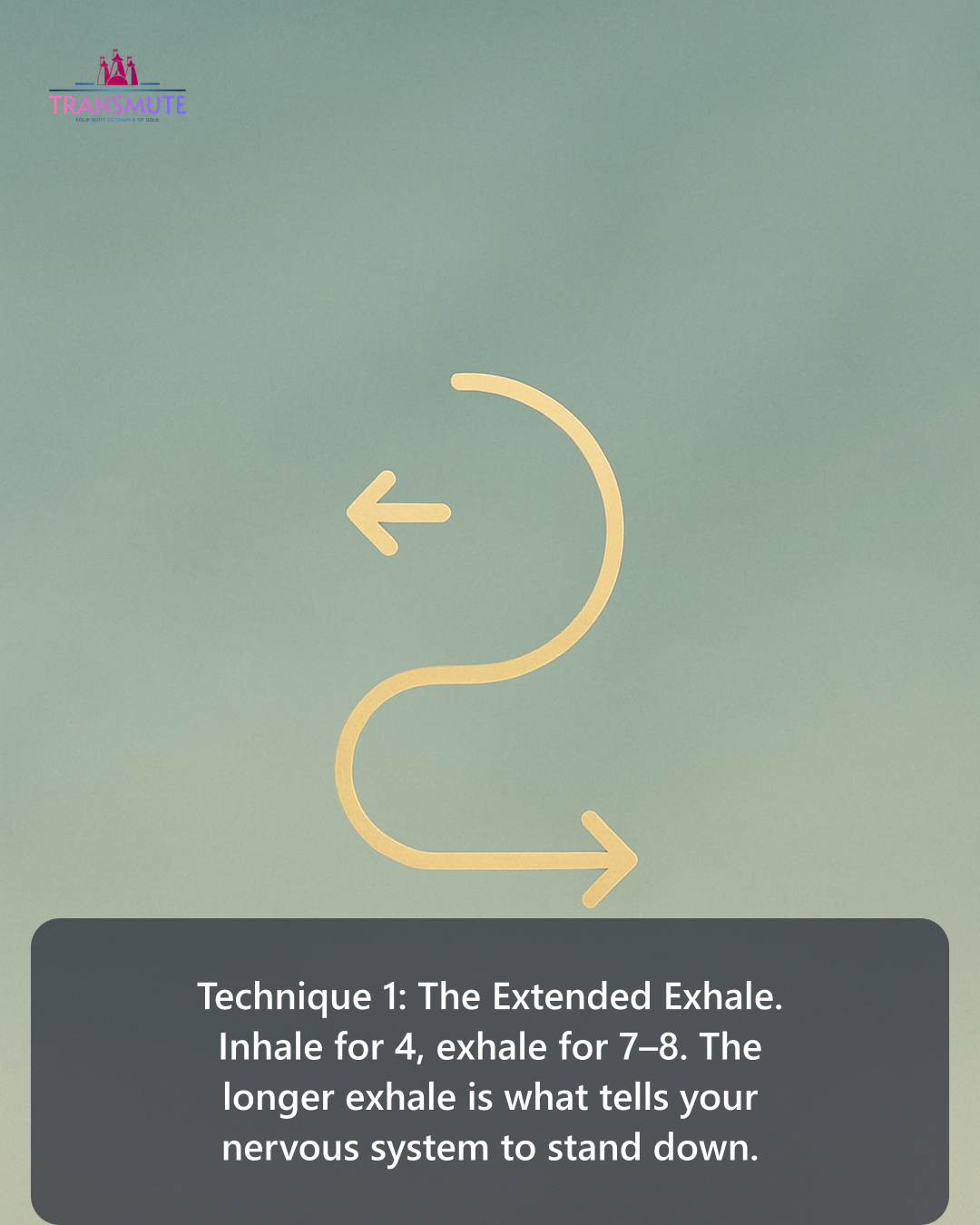
Slowing your breathing — especially making your exhale longer than your inhale — is one of the best-supported vagal techniques available. A 2021 study in Scientific Reports found measurable benefits to vagal tone and anxiety from a single session of deep, slow breathing in both younger and older adults. More recent 2025 research in Frontiers in Human Neuroscience found that slow-paced breathing reduced state anxiety and changed brain activity patterns associated with emotional regulation, with effects that persisted after exposure to stressful images.
How to do it: Inhale through your nose for a count of 4, exhale slowly through your mouth or nose for a count of 6–8. The longer exhale is the important part — it's what activates the vagus nerve's calming influence on your heart rate.
2. Cold Water on Your Face (The Dive Reflex)
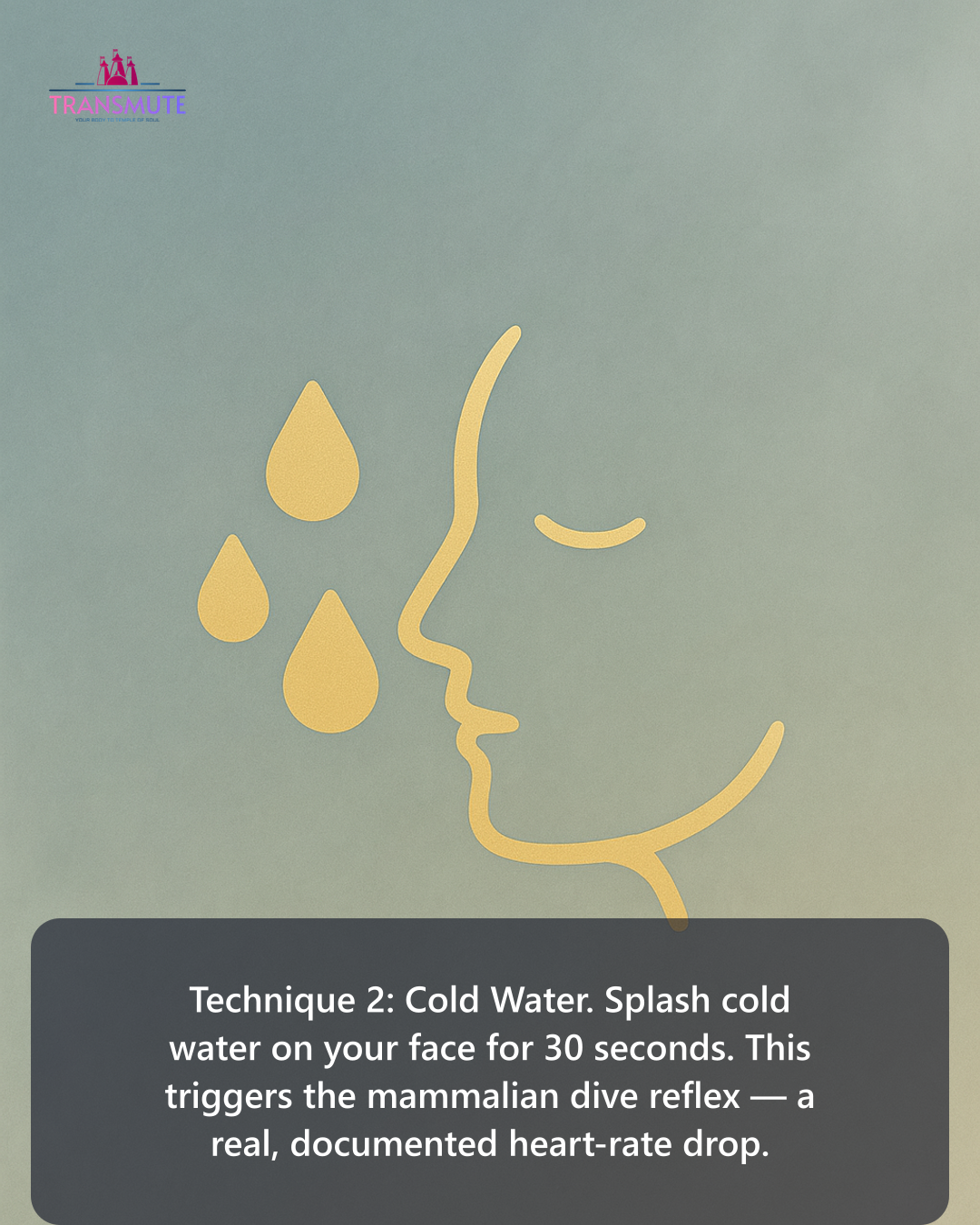
This one has a genuine evolutionary mechanism behind it: the mammalian dive reflex. When cold water touches your face — particularly around the eyes and forehead — it triggers the trigeminal nerve, which has direct connections to the vagus nerve and brainstem. Research has documented heart rate drops of 10–25% within the first 30 seconds of cold facial exposure, a well-established physiological response, not a wellness myth.
How to do it: Splash cold water on your face, hold a cold, wet washcloth against your eyes and cheeks for 30 seconds, or (if available) briefly submerge your face in a bowl of cold water while holding your breath.
3. Humming and Chanting
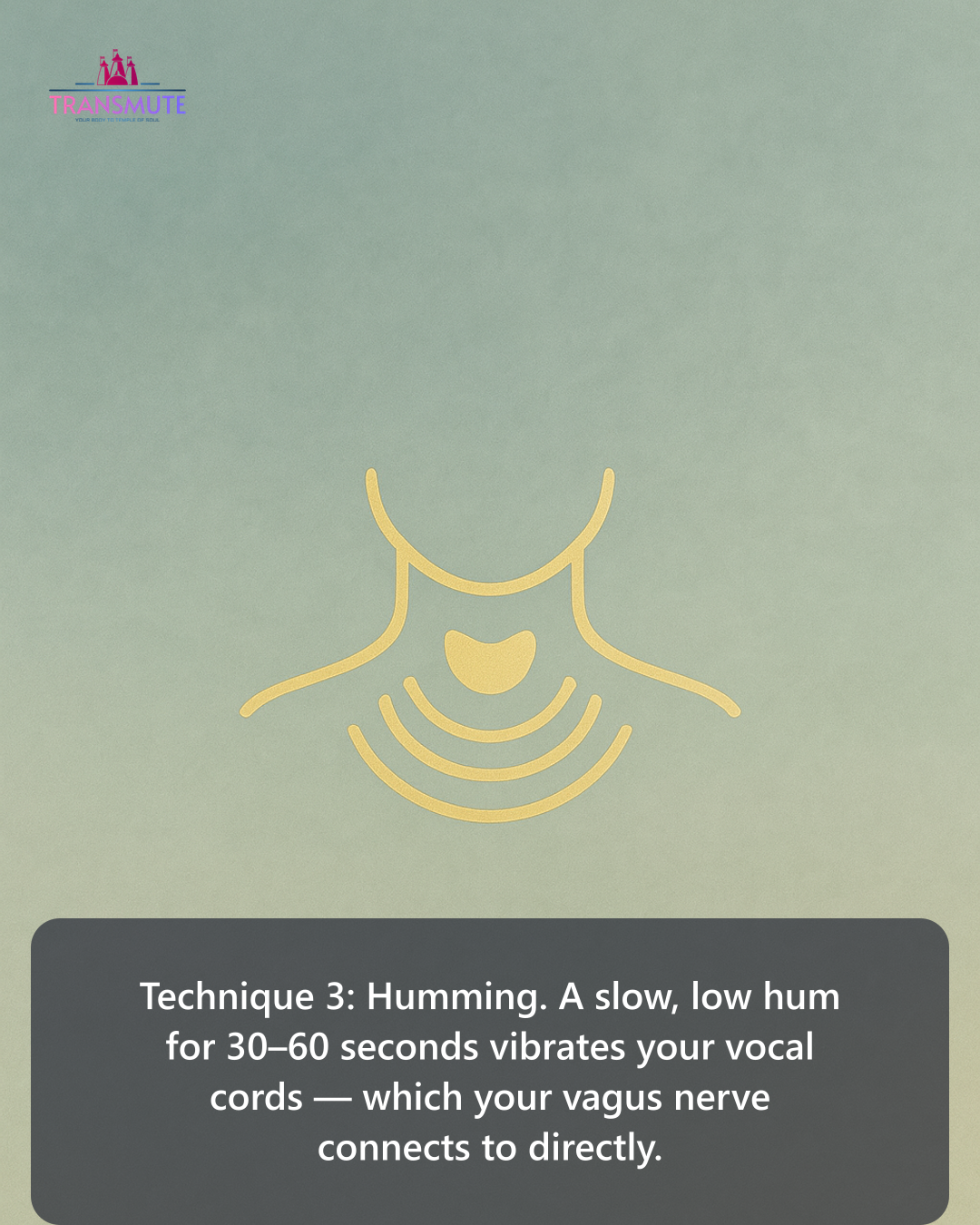
Your vagus nerve connects to the muscles of your larynx and vocal cords, so the vibration of humming, chanting, or singing mechanically stimulates it. A 2002 study in Applied Psychophysiology and Biofeedback found that humming significantly increased heart rate variability compared to normal breathing, and research published in the International Journal of Yoga found that chanting "Om" produced measurable changes in limbic (emotional-brain) activity.
How to do it: A slow, low hum for 30–60 seconds — you should feel a gentle vibration in your throat and chest. It doesn't need to be musical; the vibration is what matters.
4. Gargling
Simple, and easy to dismiss — but gargling engages the muscles at the back of your throat, which are also innervated by the vagus nerve. It's a small, accessible technique frequently recommended alongside humming and slow breathing for the same underlying reason: throat-muscle activation and vagal pathways overlap.
How to do it: Gargle water vigorously for 30–60 seconds, enough to genuinely engage your throat muscles, not just a token swish.
The 5-Minute Vagus Nerve Reset (Daily Practice)
You don't need all four techniques in a crisis — but stacking them briefly, once a day, is a reasonable way to build a habit and give your nervous system regular practice shifting into a calmer state.
- Minute 1–2: Extended-exhale breathing. Inhale for 4, exhale for 7–8. Repeat for two minutes.
- Minute 3: Humming. A slow, low hum, focusing on the vibration in your chest and throat.
- Minute 4: Gargle. With water, for 30–60 seconds.
- Minute 5: Cold finish. Splash cold water on your face, or hold a cold washcloth to your eyes for 30 seconds.
Do this once a day — mornings work well, since it sets a calmer baseline before the day's stress accumulates.
In the Moment — What to Do During a Spike of Anxiety
When anxiety spikes and you need something fast, you don't have five minutes to spare. Reach for the technique with the fastest, most immediate physiological effect: cold water on your face, held for 30 seconds. Follow it with a few rounds of extended-exhale breathing (in for 4, out for 7–8) while your heart rate settles. This isn't about making the anxious thought disappear — it's about giving your body a concrete, physical off-ramp out of full activation, so you have more room to think clearly about whatever's actually in front of you.
What This Can and Can't Do
These techniques have real, measurable, short-term effects on heart rate and heart rate variability — that part is well documented. What's less settled is how much that short-term physiological shift translates into long-term relief from an anxiety disorder specifically; most of the strongest evidence is mechanistic (it shows how the vagus nerve responds) rather than a long-term clinical outcome study on anxiety treatment. Use these techniques as genuinely useful, low-cost tools for regulating your nervous system in the moment and building a calmer baseline over time — not as a replacement for therapy or medication if you're living with a diagnosed anxiety disorder.
Frequently Asked Questions
What is the vagus nerve and how is it connected to anxiety?
It's the main nerve of your parasympathetic ("rest and digest") nervous system, running from your brainstem through your throat, heart, lungs, and gut. Strong vagal tone is associated with a faster, healthier return to calm after stress — which is why techniques that stimulate it are relevant to anxiety.
Can you actually "heal" your vagus nerve, or is that the wrong way to think about it?
"Heal" overstates it. You're not repairing damage — you're practicing techniques that measurably improve vagal tone and help your nervous system shift out of a stressed state more easily. Think "train and regulate," not "fix."
What's the fastest way to calm your vagus nerve in the moment?
Cold water on your face. The mammalian dive reflex produces a heart rate change within about 30 seconds, making it the fastest of the four techniques in this guide.
Does cold water on your face really work for anxiety?
It reliably produces a measurable heart rate drop through a well-documented reflex. Whether that translates to less anxious feeling varies by person, but the physiological mechanism itself is real, not folklore.
How does humming or gargling stimulate the vagus nerve?
Both engage throat and vocal-cord muscles that the vagus nerve innervates. Research on humming specifically shows a measurable increase in heart rate variability compared to normal breathing.
What is polyvagal theory, in plain English?
A framework, developed by Dr. Stephen Porges, describing three nervous-system states — calm and connected, fight-or-flight, and shutdown/freeze — and how your body moves between them based on its read of safety. It's influential but also has real scientific critics, so treat it as a useful lens, not settled fact.
How long does it take to improve vagal tone?
Individual sessions produce measurable short-term changes; building a meaningfully higher baseline vagal tone is more likely with consistent daily practice over weeks, similar to any other physiological training.
Is vagus nerve stimulation a substitute for therapy or medication?
No. These are supportive, in-the-moment and daily regulation tools — not a treatment for a diagnosed anxiety disorder. If anxiety is persistent, severe, or interfering with daily life, talk to a licensed mental health professional.
Key Takeaways
The vagus nerve is real physiology, not a wellness metaphor — and four specific techniques (extended-exhale breathing, cold water on the face, humming/chanting, and gargling) all have genuine evidence behind their ability to shift your heart rate and nervous system toward calm. Stack them into a 5-minute daily reset to build a calmer baseline, and reach for cold water first when you need something fast. What this isn't: a cure, a guarantee, or a replacement for professional care if anxiety is a persistent, significant part of your life.
Disclaimer
This article is for educational purposes and describes general nervous-system physiology and self-regulation techniques with cited research on their short-term physiological effects. It is not a substitute for professional medical or mental health advice, diagnosis, or treatment. If you're experiencing persistent, severe, or worsening anxiety, please speak with a qualified healthcare provider or licensed mental health professional.


Leave a Reply